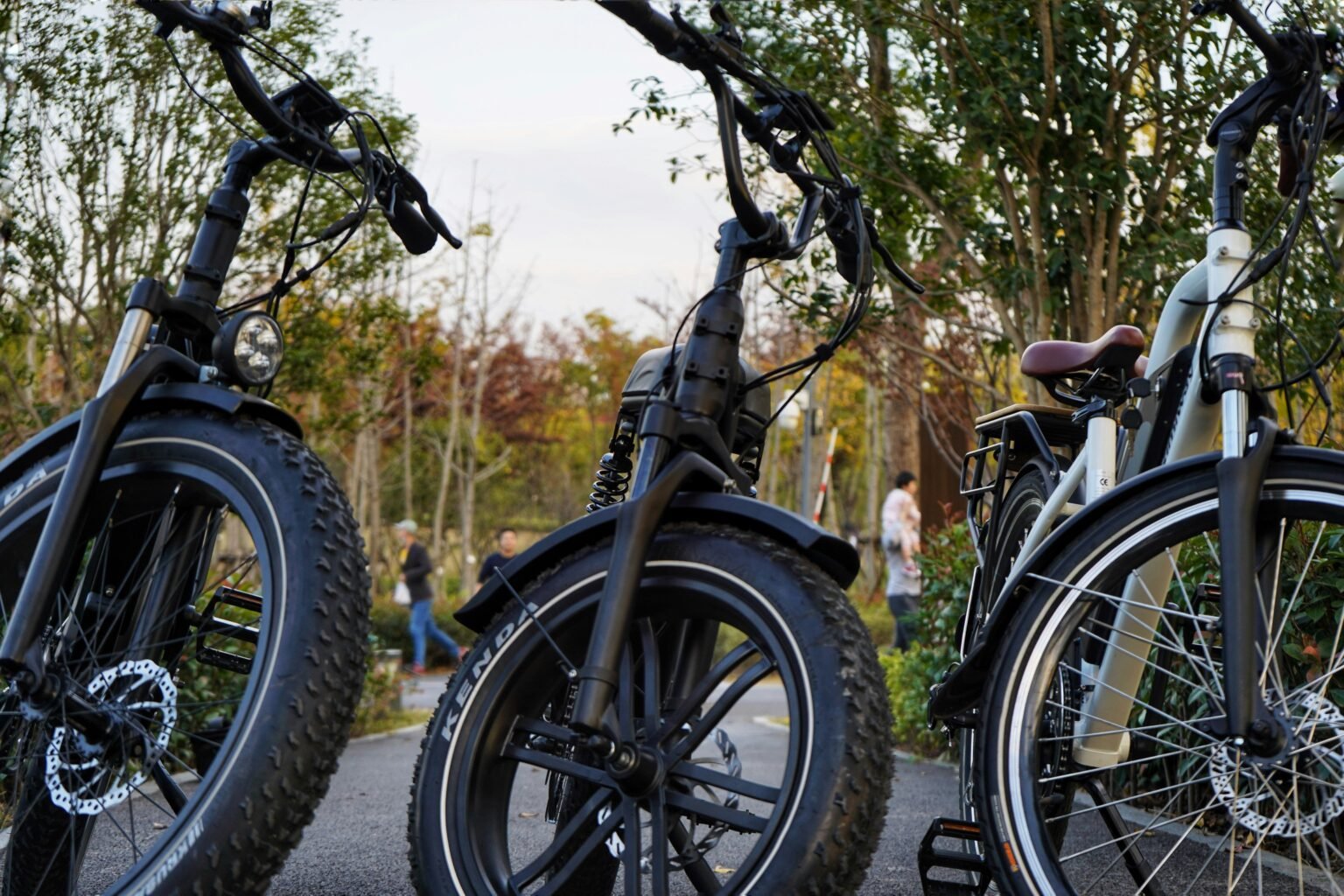
Electric bikes come in several different styles, and the best option depends heavily on how you plan to ride. A folding ebike can be ideal for storage and commuting, while a fat tire electric bike is usually better suited to rougher terrain, beach paths, snow, gravel, or riders who want extra stability.
Commuter electric bikes are normally the most practical choice for everyday road use, especially if you want a comfortable and efficient way to travel to work, run errands, or replace shorter car journeys. Mountain electric bikes, on the other hand, are built more for trails, hills, and off-road riding where suspension, grip, and motor performance matter more.
This guide compares the main types of electric bikes, including folding, fat tire, commuter, and mountain ebikes, to help you choose the right style for your riding needs. If you are completely new to ebikes, our Beginner’s Guide to Electric Bikes covers the basics of how they work, UK rules, batteries, pricing, and buying considerations in more detail.
So, let’s get started.
What Are The Main Types Of Electric Bikes?
The main types of electric bikes are designed around different riding situations rather than one universal standard.
Folding electric bikes are built for portability. They are usually smaller, easier to store, and more convenient for flats, offices, trains, campervans, or homes with limited storage space. They can be very practical for urban riders, but they may feel less stable or less comfortable over long distances than larger-frame ebikes.
Commuter electric bikes are designed for everyday travel on roads, cycle paths, and urban routes. They usually focus on comfort, efficiency, predictable handling, and practical features such as mudguards, racks, integrated lights, and upright riding positions.
Fat tire electric bikes use wider tyres for extra grip, cushioning, and stability. This makes them useful for rougher surfaces, gravel tracks, sand, snow, and uneven paths. However, they are often heavier and less efficient than slimmer commuter-style ebikes.
Mountain electric bikes are built for off-road trails, hills, and more demanding terrain. They often include stronger frames, wider gearing, more powerful braking systems, and suspension to handle uneven ground more effectively.
🚲 Electric Bike Types Compared
Different ebike types suit different riders, routes, and storage needs. The table below compares the main electric bike styles and where each one makes the most sense.
| 🚲 Ebike Type | ✅ Best For | ⭐ Main Advantage | ⚠️ Main Trade-Off |
|---|---|---|---|
| Folding Electric Bike | Commuting, storage, flats, public transport | Compact and easy to store | Smaller frame and wheels may feel less comfortable on longer rides |
| Commuter Electric Bike | Daily travel, road use, errands, cycle paths | Comfortable and efficient for everyday riding | Less suited to rough off-road terrain |
| Fat Tire Electric Bike | Gravel, sand, snow, rough paths, extra stability | Excellent grip and cushioning | Heavier and usually less efficient |
| Mountain Electric Bike | Trails, hills, off-road riding, uneven terrain | Better suspension, control, and climbing ability | More expensive and less practical for simple road commuting |
| Hybrid / Trekking Ebike | Mixed road, path, and light trail use | Versatile all-round performance | Not as specialised as commuter or mountain ebikes |
Folding Electric Bikes: Best For Storage And Commuting
Folding electric bikes are usually the most practical option for riders who need an ebike that is easy to store or transport. They are especially useful if you live in a flat, have limited garage space, commute by train, or need a bike that can fit into a car boot, office corner, or campervan.
The main advantage is convenience. A folding ebike can solve one of the biggest problems with electric bikes: storage. This makes them a strong choice for urban riders who want electric assistance without needing space for a full-size bike.
However, folding models often use smaller wheels and more compact frames, which can affect ride comfort and stability over longer distances. They are usually best suited to short and medium-distance commutes, city riding, and practical everyday use rather than rough terrain or high-speed riding.
If portability matters more than maximum range or off-road performance, a folding electric bike can be one of the most practical choices. Our guide to the Best Foldable Ebikes covers suitable options for compact commuting and easier storage.
Commuter Electric Bikes: Best For Everyday Riding
Commuter electric bikes are usually the best choice for riders who want a practical ebike for daily travel. They are designed for roads, cycle paths, town centres, errands, and regular journeys where comfort and efficiency matter more than off-road capability.
Most commuter ebikes use a more upright riding position, which helps with visibility and comfort during everyday use. Many also include practical features such as mudguards, pannier racks, lights, kickstands, and more road-friendly tyres. If you’re ready to compare some of the strongest commuter models currently available, take a look at our guide to the Best Electric Bikes for Commuting UK.
Compared to folding ebikes, commuter models usually feel more stable over longer distances because they often have larger wheels and full-size frames. They are also normally more efficient than fat tire or mountain ebikes on paved roads.
The main drawback is storage. A full-size commuter ebike is less convenient if you live in a flat, need to use public transport, or have limited space at home. However, if you mainly want an electric bike for regular road use, commuting, and replacing short car journeys, a commuter ebike is usually one of the most sensible options. If you want to explore a wider range of e-bikes at different price points, our guide to the Best Electric Bikes Under £1000 compares some of the strongest value options currently available.
Fat Tire Electric Bikes: Best For Grip And Stability
Fat tire electric bikes are designed around traction, comfort, and stability. Their wide tyres provide more surface contact with the ground, helping the bike feel more planted on loose, uneven, or slippery terrain.
This makes fat tire ebikes a strong option for gravel paths, sand, snow, dirt tracks, fields, and rougher leisure routes. They can also feel reassuring for riders who want extra stability, especially on uneven surfaces where slimmer tyres may feel less comfortable.
The wide tyres also add cushioning, which can make the ride feel smoother over bumps and broken surfaces. This is one reason fat tire ebikes are often popular for leisure riding and mixed-terrain use.
The trade-off is weight and efficiency. Fat tire ebikes are usually heavier, bulkier, and harder to pedal without assistance than standard commuter models. They may also have slightly reduced range because wider tyres create more rolling resistance.
If you mainly ride on roads and cycle paths, a commuter or hybrid ebike will usually be more efficient. But if you want something more rugged and stable for mixed terrain, a fat tire electric bike can make a lot of sense.
Our guide to the Best Fat Tire Electric Bikes compares some of the strongest options available.
Mountain Electric Bikes: Best For Trails And Hills
Mountain electric bikes are built for more demanding terrain, including trails, hills, woodland paths, rocky surfaces, and off-road routes. They are designed to handle conditions that would be uncomfortable or unsuitable for most commuter or folding ebikes.
The biggest advantages are control, grip, and climbing ability. Electric assistance makes steep climbs easier, while wider tyres, stronger brakes, tougher frames, and suspension help the bike stay more stable on uneven ground.
Mountain ebikes are especially useful for riders who want to explore trails or ride in hilly areas where a standard bike would require much more effort. They can also be a good option if comfort over rough surfaces matters more than storage or road efficiency.
However, they are not always the best choice for everyday commuting. Mountain ebikes are often heavier, more expensive, and less efficient on smooth roads than commuter or hybrid models. Features designed for off-road control may be unnecessary if most of your riding is on paved paths.
If your routes include steep hills, forest tracks, or rough terrain, a mountain electric bike is usually the strongest option. If climbing is your main priority, our guide to the Best Electric Bikes for Hills UK compares models with the motor torque, gearing and battery capacity needed for more demanding gradients. If you mostly ride on roads, a commuter or hybrid ebike will often be more practical.
Final Thoughts
The best electric bike depends far more on how and where you ride than simply choosing the most powerful or expensive model available.
For everyday commuting and road use, commuter electric bikes are usually the most practical option. They balance comfort, efficiency, and range well for regular travel and urban riding.
If storage space or portability is important, folding electric bikes can be an excellent choice. They are especially useful for flats, train commuting, offices, and riders who need something compact and easy to transport.
Fat tire electric bikes are better suited to rougher terrain, gravel, sand, snow, or riders who prioritise stability and comfort over efficiency. Meanwhile, mountain electric bikes are the strongest option for trails, steep hills, and more demanding off-road riding.
In many cases, the best choice is not the bike with the highest specifications, but the one that best fits your actual riding habits and environment. Thinking about where you ride most often, how far you travel, how much storage space you have, and whether you prioritise portability, comfort, or off-road performance will usually narrow down the right option quickly.
Once you’ve chosen the right type, our Electric Bike Ownership Guide covers what to expect from charging, battery lifespan, maintenance and ongoing running costs.
If you are still deciding between different budgets and performance levels, our guides to the Best Electric Bikes Under £500 and Best Electric Bikes Under £1000 compare some of the strongest options currently available.
FAQs
Commuter and hybrid electric bikes are often the easiest starting point for beginners because they balance comfort, efficiency, predictable handling, and everyday practicality well.
Range depends more on battery size, rider weight, terrain, speed, and assistance level than bike type alone. However, commuter and hybrid electric bikes are often more efficient on roads than fat tire or mountain ebikes.
Yes, electric bikes are significantly cheaper. The cost per mile is often less than 1p, compared to 15–25p per mile for petrol cars.
Thank you for reading our comparison of the different electric bike types.
Feel free to leave a comment below if you have any thoughts or queries that you’d like us to take a look at – we’d be happy to help.