Drone range is one of the most misunderstood parts of buying and flying a drone. Manufacturers often advertise impressive maximum distances, but those figures are usually based on ideal conditions rather than everyday use.
In this guide, we’ll cover how far drones can really fly, what affects range in practice, and how range differs between toy drones, beginner camera drones, advanced consumer models, and FPV drones.
If you want a broader overview of drone types and buying considerations, take a look at our Beginners Guide To Drones.
Let’s get started.
What Drone Range Actually Means
Drone range refers to the maximum distance a drone can travel from the controller while still maintaining a stable connection. In most cases, this includes both control range and video transmission range, although manufacturers do not always explain the difference clearly.
Control range is the distance at which the drone can still receive commands from the pilot. Video transmission range is the distance at which the live camera feed remains usable. On cheaper drones, these two limits are often quite short and may degrade quickly once obstacles or interference are introduced. On more advanced models, both control and video transmission tend to be much stronger and more stable.
It’s also important to separate theoretical range from practical range. A drone may be advertised with a maximum range of several kilometres, but very few users will ever fly that far in real conditions. Local laws, signal interference, weather, battery life, and line-of-sight requirements all reduce how far a drone can actually be flown.
For most buyers, the real question is not the maximum number printed on the box, but whether the drone can maintain a stable, reliable connection at the distances they are likely to use.
Typical Drone Range by Drone Type
Drone range varies significantly depending on the type of drone you’re using. Smaller, cheaper models are usually designed for short-range recreational flying, while more advanced drones are built to maintain stronger connections over much longer distances.
The table below gives a general comparison of typical advertised and real-world range by drone category.
| 🚁 Drone Type | 📢 Advertised Range | 📶 Real-World Range | 🎯 Best For |
|---|---|---|---|
| Toy / mini drones | 30–100 m | 20–80 m | Indoor flying and basic practice |
| Beginner camera drones | 200 m–2 km | 100 m–1 km | Casual outdoor use and learning |
| Advanced consumer drones | 5–20 km | 1–8 km | Photography, video and travel |
| FPV drones | 500 m–10 km | 300 m–5 km | Speed, racing and immersive flying |
| Professional drones | 8–20 km+ | 2–10 km | Commercial filming and specialist work |
What Affects Drone Range in Real Conditions
Real-world drone range depends on much more than the drone itself. Even a model with a strong quoted range can perform quite differently depending on where and how it is flown.
One of the biggest factors is signal interference. Flying in built-up areas, near other wireless devices, or around power lines can reduce both control and video transmission range. This is one reason drones often perform better in open countryside than in busy urban environments.
Obstacles also make a major difference. Trees, buildings, hills, and even large vehicles can weaken or block the signal between the drone and controller. Most drones achieve their best range in clear, open areas with a direct line of sight.
Battery performance directly impacts how far a drone can travel and return safely. If you want a deeper breakdown of how batteries affect flight time and long-term performance, see our guide to drone battery life.
Weather conditions also matter. Wind can force the motors to work harder, especially on the return journey, reducing both flight time and safe operating range. Poor visibility may also make it harder to maintain line of sight, which is a legal and practical restriction in the UK.
Finally, controller and transmission technology play a huge role. More advanced drones use stronger communication systems and better antennas, which is why they can maintain stable connections at much longer distances than entry-level models.
How Far Can You Legally Fly a Drone in the UK?
Even though many drones are capable of flying several kilometres, UK laws significantly limit how far you can actually fly in practice.
Under Civil Aviation Authority guidelines, drones must be kept within visual line of sight (VLOS) at all times. This means you must be able to see your drone with your own eyes (not just through the camera feed) without using binoculars or other aids.
In most real-world scenarios, this limits practical flying distance to around 200–500 metres, depending on the drone size, visibility, and surroundings.
There are also additional restrictions to consider:
– You must not fly near people, buildings, or restricted airspace
– You must stay below 120 metres (400 feet) in altitude
– You must maintain full control of the drone at all times
Because of these rules, the extremely long ranges advertised by manufacturers are rarely usable in the UK. Instead, they act more as an indicator of signal strength and connection reliability rather than a distance you should aim to reach.
If you want a full breakdown of legal requirements, you can refer to our guide on drone laws and safe flying practices.
Does Longer Range Actually Matter?
For most users, maximum range is far less important than it initially seems.
In everyday use, very few drone pilots need to fly more than a few hundred metres away. Whether you’re capturing photos, recording video, or simply flying recreationally, most flights take place within a relatively short distance.
What really matters is connection stability, not just raw range.
A drone with a strong transmission system will:
– Maintain a stable video feed
– Respond instantly to controls
– Handle interference more effectively
This results in a much better overall flying experience, even if you never come close to the maximum advertised range.
Longer range becomes more relevant in specific scenarios:
– Filmmaking in large open areas
– Surveying land or property
– FPV flying and racing
– Exploring remote environments
For most beginners and casual users, a drone with reliable performance at shorter distances is far more valuable than one with extreme range on paper.
How to Improve Drone Range
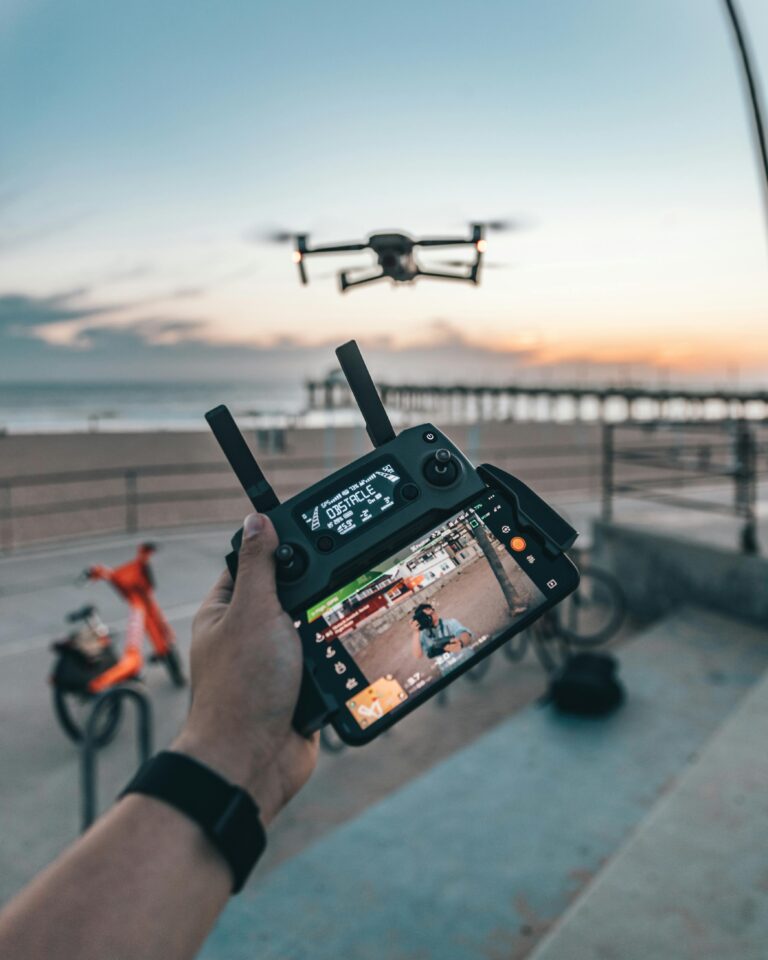
While you can’t change the core capabilities of your drone, there are several ways to improve real-world performance and maintain a stronger connection.
Fly in open areas
Avoid buildings, trees, and obstacles where possible. Open environments allow signals to travel more freely and reduce interference.
Maintain line of sight
Keeping a clear visual path between your controller and drone helps maintain both control and video signal strength.
Reduce interference
Stay away from crowded urban areas, WiFi-heavy environments, and power lines where signal congestion is higher.
Check antenna positioning
On drones with external antennas, positioning them correctly can improve signal quality and range.
Keep firmware updated
Manufacturers often release updates that improve transmission stability and overall performance.
Monitor battery levels
Always leave enough battery for a safe return. Pushing range too far without considering battery life is one of the most common mistakes.
Small adjustments like these can make a noticeable difference, especially when flying in less-than-ideal conditions.
Final Thoughts
Drone range is often one of the first specs people look at, but it’s rarely the most important in real-world use.
While some drones are capable of flying several kilometres, legal limits, environmental factors, and battery life all reduce how far you can actually fly in practice. For most users, stable performance within a few hundred metres is far more valuable than extreme range figures.
Understanding how range works — and what affects it — makes it much easier to choose the right drone for your needs. Rather than focusing purely on maximum distance, prioritising connection stability, reliability, and ease of use will lead to a better overall experience.
FAQs
Most consumer drones can fly anywhere from a few hundred metres to several kilometres. However, in real-world use (especially in the UK) flights are typically limited to a few hundred metres due to legal and visibility requirements.
High-end consumer drones can advertise ranges of 10–20 km or more. In practice, environmental factors and regulations mean most users will operate well below this distance.
No. In the UK, drones must be flown within visual line of sight at all times under Civil Aviation Authority regulations.
Thank you for reading our explanation of drone battery life and how to extend it.
If you’re interested in buying your own drone, check out our other article on the Best Drones For Beginners.
Feel free to leave a comment below if you have any thoughts or queries that you’d like us to take a look at – we’d be happy to help.